
Metrics for the Internet, Information Technology,
and Service Management
Over 540 Objective
Metrics Defined
83 Graphical Metric Reports
show over 240 metrics
Compliant with ITIL
ISO 20000
IT Service Management
The CIOs biggest challenges is to justify staffing and spending levels as they strive to improve IT efficiency. When assessing comparative benchmarks, it is hard to know which metrics to start with. The Metric for the Internet, Information Technology and Service Management HandiGuide helps CIOs to understand and pick the appropriate comparative benchmarks to justify staffing and spending, improving IT operations and demonstrating the value of IT to the business.
Defining Which Metrics to Use
Most IT metrics efforts lack relevance to the business and are not well linked to business outcomes. They tend to be IT focused, such as WAN availability or server downtime. It is difficult for the business to understand how these measures relate to its objectives, and they provide little insight into the value that IT delivers.
CIOs must create a scorecard and service level agreements that:
- Relate to the enterprise and its management team. Server availability, network throughput, help desk call volumes, capacity utilization, and other IT operational metrics are not relevant to business executives. These types of metrics need to be translated into something enterprise management understands, such as availability of business applications or the cost to support a business area. The IT-operational metrics should be kept within IT unless they can be put in enterprise terms.
- Relate to the enterprise strategic and tactical objectives. Enterprise executives are concerned with introducing new products and services, improving customer loyalty and satisfaction, increasing gross margins, and growing market share. IT metrics must be linked directly to these enterprise objectives, specifically demonstrating how IT initiatives contributed favorably to improving them.
Effective SLAs are extremely important to assure effective Information Technology operations. The metrics used to measure and manage performance to SLA commitments are the heart of a successful agreement and are a critical long term success factor. Lack of experience in the use and implementation of performance metrics causes problems for many organizations as they attempt to formulate their SLA strategies and select and set the metrics needed to support those strategies. Fortunately, while reaching for perfection is difficult and costly, most organizations can achieve their objectives through a carefully chosen set of simple-to-collect metrics. Hopefully, this paper provides some insights into the "whys" and "hows" of this selection process. The Metrics HandiGuide is the tool that can be used to accomplish that task.
At the heart of an effective Service Level Agreement (SLA) are performance metrics and they
- Measure the right performance characteristics to ensure that the client is receiving its required level of service and the service provider is achieving an acceptable level of profitability
- Can be easily collected with an appropriate level of detail but without costly overhead, and
- Tie all commitments to reasonable, attainable performance levels so that "good" service can be easily differentiated from "bad" service, and giving the service provider a fair opportunity to satisfy its client.
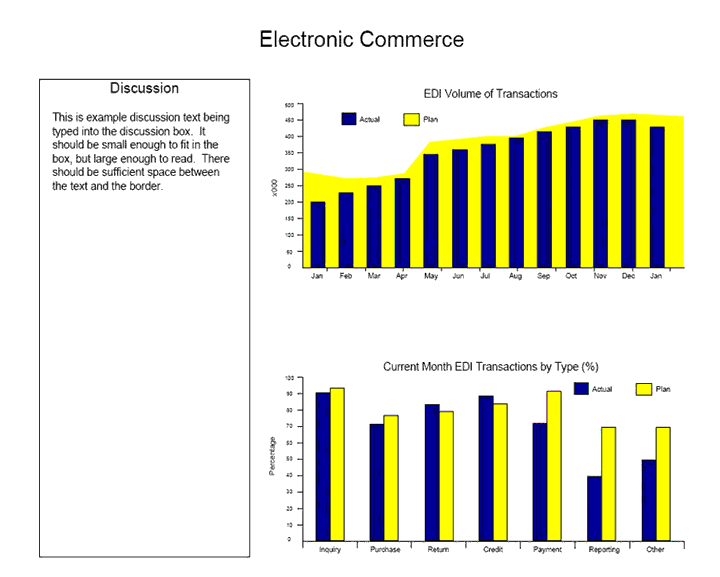
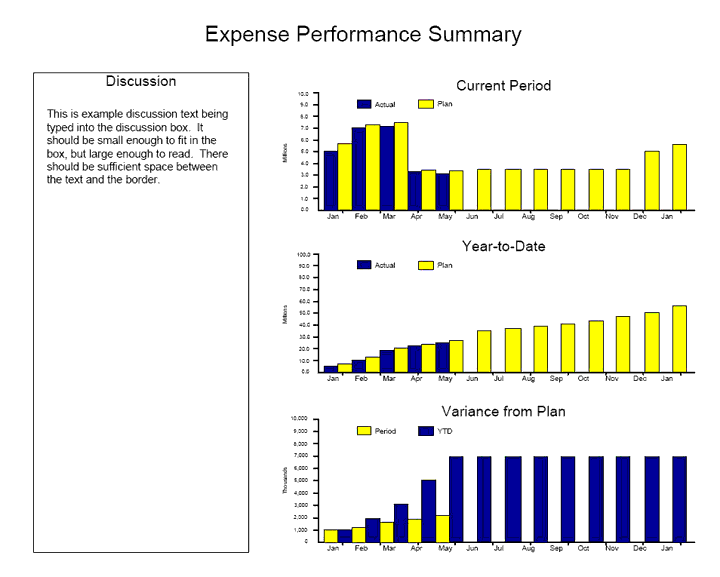
The Metrics for the Internet, Information Technology and Service Management HandiGuide is over 300 pages, defines 540 objective metrics, and contains 83 metric reports that show over 240 objective metrics.
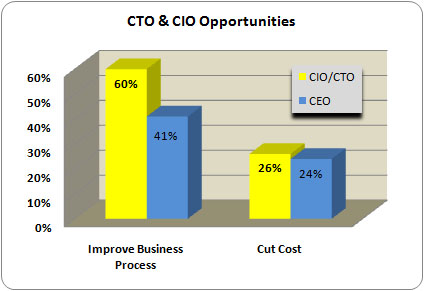
Operational Improvement Opportunities as defined by
CIO, CTO, and CEO
The metrics cover all areas of the Internet, Information Technology, and Service Management -- including WIRELESS metrics which in turn includes mobile broadband specifications. In addition, there are industry specific examples for financial services, distribution, manufacturing, education, entertainment, government, hospitality, insurance, medical, real estate and retail.
- Organizational responsibilities defined
- Metric process, design, and definition of 540 specific objective metrics
- 83 sample metric reports - includes over 240 of 540 objective metrics
- Graphic data presentation rules
- A full metric report package is defined - a template you can use right away
- Wireless metrics examples are featured
- Updated to comply with Sarbanes-Oxley
Sample Metrics Reports in Graphic Format
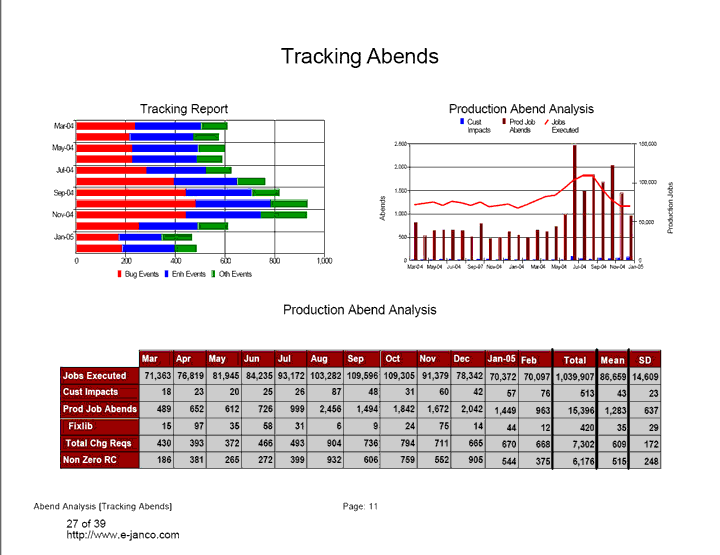
Click on the individual images above to to enlarge
Metric and IT Measurement News
Service-Oriented Architecture and IT Service Management Are Keys To Success in the Recovery
SOA and ITSM drive success and productivity
One bad customer experience can cost you that customer for life. Hospitality, travel, retail, healthcare, and financial services are especially prone to losing customers who have a negative experience. It does not take much for a customer to decide that you and your company are not worth his time, effort, or money.Customers like to feel loved, and they are turned off very quickly when they sense that you do not care about the pain they are feeling. Even if you cannot help them because the situation is beyond your control, acknowledge that you understand both the situation and their frustration.
No
customer wants the person serving her to be distracted or preoccupied. Ever go
to the local mall and try to get help from a teenager focused more on texting
her friends than helping you find what youre looking for? On the other hand,
being too focused can be a bad thing. Have you ever asked an innocent question
out of curiosity and then found yourself stuck for an eternity while a customer
support person hunts endlessly for an answer? This person is likely so focused
on getting the answer that he does not realize that you really do not care that
much about it and would rather not wait for an answer to an inessential
question. Be sure your people understand the degree of focus required for the
job.
Even if the employee has the right skill set and experience, his odds of being successful and remaining on the job are low if his core behaviors and tendencies do not line up with those needed for success in that particular role. This is especially true for customer-facing roles in which your frontline employees act as extensions of your brand and heavily influence the customer experience.
- more infoIT Service Management drives customer satisfaction
Industry estimates peg the costs of acquiring new customers as being about five times more than the costs incurred to satisfy existing customers. IT Service Management and change control are keys to this process.
Customer retention and satisfaction also drive profits. According to some experts*, a 2 percent increase in customer retention can have the same effect on profits as cutting costs by 10 percent. And a 5 percent reduction in customer defection rate can increase profits by up to 25 to 125 percent, depending on the industry.
Additionally, existing customers are the ones who are most likely to be future purchasers. Theyve already shown they want and like your products or services and are willing to pay for them. And in many cases, customer profitability tends to increase over the life of a retained customer.
So whats the key to retaining customers? Keeping customers happy has always been a cornerstone of good business practice. But with today's economic conditions, delivering good service to ensure satisfaction has become critical to any companys success.
- more infoSecurity of wireless networks compromised by Google
Security of wireless networks is a concern of Connecticut Attorney General Richard Blumenthal who is heading up a 30-state investigation into Google's Wi-Fi data gathering scandal.
Blumenthal's investigation adds to the legal headaches for Google caused by the revelation that its Street View cars were collecting wireless "payload" data in addition to geolocation data from unsecured wireless hot spots. Ever since Google revealed the extent of its data gathering a month ago in response to inquiries from German regulators, lawyers and politicians have been lining up to express their outrage.
"Consumers have a right and a need to know what personal information--which could include e-mails, Web browsing, and passwords--Google may have collected, how, and why," Blumenthal said in a statement posted on his Web site. "Google must come clean, explaining how and why it intercepted and saved private information broadcast over personal and business wireless networks."
- more infoRecord mangement key to information goverance
Effective record management and information governance provides a
foundation for addressing the various challenges faced with electronic
information, including:
-
Management of information growth. Proactively monitoring and managing what content is being stored based on business value and record keeping obligations;
-
Mitigation of risk. Reducing risk and ensuring conformance with different regulatory, legal and business policies; and
-
Management of access to content. Driving competitive advantage and improving business operations through both access control and better re-use of information. Policy is at the heart of each of these challenges and key to an information governance strategy.
-
Information governance is most effective when policies can be carried forward consistently with enabling technologies. Foundational technologies at the core of a good information governance strategy include classification, security and access control, retention policy management, search, archiving and content management.
Recovery Point and Recovery Time Metrics
Recovery point objective (RPO) refers to the amount of data loss a customer can tolerate, specifically the point in time to which your enterprise must be able to recover the data. Some enterprises require an RPO of ZERO. That means the enterprise cannot lose a single committed transaction in the event of a site failure; they must be able to recover the data back to the zero minute of the time of the disaster. There are implications to setting up an RPO of zero. The replication solution will require synchronous replication (explained in detail later in this section) and may impact performance of the application being replicated.
An
RPO of greater than zero, for example 30 minutes, can be handled differently. An
RPO of 30 minutes means the customer can tolerate losing the last 30 minutes of
transactions in the event of a site failure. If the disaster occurrs at 12:00,
the customer must be able to recover the data to at least 11:30 (30 minutes
prior to the disaster). This can most likely be accomplished with asynchronous
replication with minimal performance impact to the application. In this
situation, careful planning and monitoring of the write-history log is essential
to support the expected RPO.
A RPO can only be
determined by their business rules and other governances of their environment.
The customer must weigh the risk of data loss in a higher RPO against the cost
and performance impact of a zero RPO.
Recovery time objective (RTO) refers to the amount of time it takes a customer to get their backup site up and running after a complete failure at the primary site. Most customers have an RTO of anywhere from 15 minutes to 8 hours, though the average is about 2 hours. This includes the time to failover the replicated LUNs (logical Unit Number) to the backup EVA (Enterprise Virtural Array) , recover the backup database and bring it online, and redirect any applications to the backup database server. A faster RTO can usually be accomplished by prestaging the backup site to the greatest extent possible.
Most Common Security Weaknesses - Sarbanes-Oxley Compliance
Security Manual Template has a solution
for each of these weaknesses.
1. Improper account provisioning with segregation of
duties
2. Insufficient
controls for change management
3. A general lack of understanding around key system
configurations
4. Audit
logs not being reviewed (or that review itself not being logged)
5. Abnormal transactions not
identified in a timely manner be considered abnormal or a violation of a
security policy within the network.
go to http://www.itproductivity.org/Security.htm
- more infoRisk management starts with risk assessment
There have been lessons learned from the current financial crisis in wasy to address perceived weaknesses in risk identification, assessment and management. The direction that CEOs and CIOs need to taker are:
- Risk management must be given greater authority
- Senior executives must lead risk management from the top
- Management needs to review the level of risk expertise in their
organisation, particularly at the
highest levels - Managers should pay more attention to the data that populate risk models,
and must combine
this output with human judgment - Stress testing and scenario planning can arm executives with an
appropriate response to events
Incentive systems must be constructed so that they reward long-term stability, not short-term
profit - Risk factors should be consolidated across all the business operations
- Managers should ensure that they do not rely too heavily on data from external providers
- A careful balance must be struck between the centralisation and decentralisation of risk
- Risk management systems should be adaptive rather than static
Common threads for security issues
A comprehensive survey compares findings of several security studies and finds that:
- Big jumps in incidence of password sniffing, financial fraud, and malware infection.
- Organizations often are fraudulently represented as the sender of a phishing message.
- Average losses due to security incidents are down again this year (from $289,000 per company to $234,244 per company), though they are still above 2006 figures.
- Twenty-five percent of companies felt that over 60 percent of their financial losses were due to non-malicious actions by insiders.
- Most companies are satisfied, though not overjoyed, with all security technologies.
- Most companies t their investment in end-user security awareness training was inadequate, but most felt their investments in other components of their security program were adequate.
- When asked what actions were taken following a security incident, 22 percent stated that they notified individuals whose personal information was breached and 17 percent stated that they provided new security services to users or customers.
- When asked what security solutions ranked highest on their wishlists, many named tools that would improve their visibility - better log management, security information and event management, security data visualization, security dashboards and the like.
- Companies generally said that regulatory compliance efforts have had a
positive effect on their organization's security
programs.
Improving knowledge worker productivity a CIO challenge
Many analysts support the notion of an integrated productivity environment for information workers. Many vendor frameworks combine these capabilities to create the next-generation workplace for information workers. The introduction of Microsoft Office 2007, Open Office and Google Documents are solutions with tight design integration, deliver the functionality that would have previously required 6 - 10 products for a full business productivity platform. The next releases of these products will take this integration to the next level by providing more flexibility in delivery and new capabilities to help improve productivity by saving the business time and money. - more infoChnage control and Quality Assurance Fail at McAfee
Change control and quality control fail at McAfee, as a result they released a product that caused thousands of customer PC to fail. McAfee has responded with the following statements:
How did this DAT file get through McAfees Quality Assurance process?
- Process Some specific steps of the existing Quality Assurance processes were not followed: Standard Peer Review of the driver was not done, and the Risk Assessment of the driver in question was inadequate. Had it been adequate it would have triggered additional Quality Assurance steps.
- Product Testing there was inadequate coverage of Product and Operating System combinations in the test systems used. Specifically, XP SP3 with VSE 8.7 was not included in the test configuration at the time of release.
What is McAfee going to do to ensure this does not repeat?
- Strict enforcement of rules and processes regarding DAT creation and Quality Assurance.
- Addition of the missing Operating Systems and Product configurations.
- Leveraging of cloud based technologies for false remediation.
- A revision of Risk Assessment criteria is underway.
What is McAfee going to do to prevent this from happening again?
- Nearly all of McAfee's 7,000 employees have been working around the clock to help customers get back to business as usual and to make sure this never happens again.
- McAfee is implementing additional QA protocols for any releases that directly impact critical system files. McAfee is rolling out additional capabilities in Artemis that will provide another level of protection against false positives by leveraging an expansive whitelist of critical system files and their associated cryptographic hashes.
Network Solution Sites Hacked Again
Securi Security Labs said that at least 50 sites hosted by Networks Solutions had been hacked and that malicious JavaScript injected into those sites was redirecting unsuspecting users to a Ukrainian attack server. The same server was involved in the earlier attacks against Network Solutions-hosted blogs.
Acccording to Computerworld a spokesman for Network Solutions said they have received reports that some Network Solutions customers are seeing malicious code added to their websites.
- more infoMany compliance isses faced by CIOs
Compliance with regulatory mandates and internal security policies is critical to the success of any enterprise. To protect the integrity of enterprise-owned information, prevent corporate scandals, and ensure customer privacy, new laws and regulations have emerged governing a variety of enterprises. Some of today's more prominent security mandates include:
- SOX - The Sarbanes-Oxley Act of 2002 requires strict internal controls and independent auditing of financial information as a proactive defense against fraud.
- HIPAA - The Health Information Portability and Accountability Act of 1996 requires tight controls over handling of and access to medical information to protect patient privacy.
- GLBA - The Gramm-Leach-Bliley Act of 1999 requires financial institutions to create, document and continuously audit security procedures to protect the nonpublic personal information of their clients, including precautions to prevent unauthorized electronic access.
- FISMA - The Federal Information Security Management Act of 2002 is meant to bolster computer and network security within the federal government and affiliated parties (such as government contractors) by mandating yearly audits.
- Basel II - The Capital Requirements Directive/Basel II Accord established an international standard that banking regulators can use when creating regulations about how much capital banks need to put aside to guard against the types of financial and operational risks banks face.
- UK Data Protection Act of 1998 - The eight principles of the Data Protection Act state that all data must be processed fairly and lawfully; obtained and used only for specified and lawful purposes; adequate, relevant and not excessive; accurate, and where necessary, kept up to date; kept for no longer than necessary; processed in accordance with individuals rights as defined in the Act; kept secure; and transferred only to countries that offer adequate data protection.
Some IT skills still in demand
Not much hiring is expected in the second quarter, but certain skills are in demand. Also, health care jobs for IT professionals are increasing, especially in software and consulting related to electronic medical records.
Seventy-nine percent of surveyed CIOs are feeling
optimistic about their companies' prospects for growth, and 40 percent are
planning for new projects. But that positive streak does not necessarily
translate into big growth in full-time hiring in the second quarter, according
to a recent hiring and skills report.
Only 9 percent of 1,400 CIOs polled for the Robert Half
Technology IT Hiring Index and Skills Report are planning new hires this
quarter. And with 4 percent expecting to cut jobs, the net gain in hiring is 5
percent, the outplacement company reported in early
March.
Telecommuting challenges
Teleworking - variously referred to as telecommuting, e-commuting, e-work, telework, working at home (WAH), or working from home (WFH) - is a work arrangement in which employees enjoy flexibility in working location and hours. In other words, the daily physical commute to a central place of work is replaced by telecommunication links.
Teleworking is not just an arrangement; it is a way of life. It requires changes in behavioral patterns that go beyond the usual. It also requires a lot of creativity to stay in touch with people inside and outside the organization. Most teleworkers have two lifelines to their organization -remote VPN access (for access to e-mail, calendar, and Intranet documents) and a telephone (for real-time communication). With no technical on-site support, a failure of even one of these lifelines leads to serious problems. Experienced teleworkers therefore prepare for the worst case scenario while all systems are working.
- more infoIT Infrastructure Cost Rising
Many of the largest IT budget problems can be traced back to five big money drains:
- Storage expansion - IT departments are already stretching their budgets for storage, and the demand is only going to grow. The volume of data an average business collects and stores actually doubles every 18-24 months.
- System complexity - a survey of Canadian IT workers show that many DBAs already devote up to 80 percent of their time to routine systems maintenance. Add to that the work that needs to get done on strategic projects, and you may be looking at major overtime charges.
- Hardware sprawl - More systems usually mean more complexity and maintenance and more servers definitely mean more power and cooling costs. For most companies, data center hardware accounts for the bulk of the power and cooling bill. In some cases, power costs can even exceed the cost of IT equipment!
- Reliability and scalability - most enterprise information is contained within IT systems, it is absolutely critical that those systems be available whenever your employees or your customers need them. Now you're talking about 24x7 availability, meaning that your systems have to scale along with your workloads. But scaling out by adding servers raises hardware and maintenance costs, and the wrong storage configuration can cause major delays in delivering key information.
- Compliance - Organizations face large fines if they are found to be out of compliance, and bad press and security breaches can dissolve shareholde confidence, destroy customer trust and send stock prices plummeting almost overnight.
Janco has solutions for these IT Infrastructure issues
- more infoFeds inches towards more control over Internet
Homeland Security and the National Security Agency may be taking a closer look at Internet communications in the future.
The Department of Homeland Security's top cybersecurity official said that the department may eventually extend its Einstein technology, which is designed to detect and prevent electronic attacks, to networks operated by the private sector. The technology was created for federal networks.
Is this the camel's nose in the tent?
- more infoVA revamps IT Infrastructure - cuts projects
VA infrastructure is changed and projects are cut.
To improve management of ongoing projects, as of Feb. 15 every IT project in the department, and about 250 IT projects overall, are being managed through the Program Management Accountability System introduced in July. The system requires IT projects to deliver new functionality within six months and to meet project milestones. The VA also is using an online IT dashboard to identify and track troubled projects.
The Veterans Affairs Department has terminated its Enrollment System Redesign, Pharmacy Reengineering and 10 other failing information technology projects for a projected savings of $54 million this fiscal year, officials announced today.
The goal is to put IT projects on the accountability system as soon as possible, it took several months to identify and terminate contracts associated with the canceled projects.
The enrollment systems project was budgeted at $24 million, and the pharmacy project at $23 million, for fiscal 2010.
Other canceled VA IT projects included the Barcode Expansion, Delivery Service, Rights Management Server and VA-Defense Department Laboratory Data Sharing and Interoperability terminology support.
The 12 canceled IT projects were among 44 IT projects halted by VA officials in July 2009. Chief Information Officer Roger Baker today released the list of the 12 terminated projects and 32 restarted projects.
Cost cutting continuing in many IT organizations
No matter what the media says about the
recession bottoming out, times are still tough for may IT organization -
hiring is down and budget cuts continue. Over 200 CIOs interviewed by
Janco associates say, many IT projects are delayed or stopped, layoffs continue
and next year's budget will be lower.
Most CIO's continue to look for ways to reduce costs. Many no longer are willing to pay a premium for vendors to fix any problems in key software and hardware within four hours instead of a 24-hours. Sometimes things stay broken until IT staffers can figure out the fixes themselves.
Steps that CIOs are taking include:
-
Reducing systems maintained on a 7/24 level - Instead of eliminating maintenance contracts, reduce the frequency of turnaround time -- from, say, four hours to 24 hours or even longer.
-
Reducing weekend and late-night service levels.
-
Reducing contracted fees paid to vendors -- many are more willing than in the past to wheel and deal, rather than lose a contract completely.
-
Communicating with users that they can expect decreased maintenance, particularly with regard to timing and service levels.
However it is critical to not impact core infrastructure systems or those that are customer centric.
- more infoGoverment to go after Oursourcers
Populist rhetoric from U.S. leaders and President Obama has some in India outsourcing enterprises concerned about what kind of role its companies will have in future technology endeavors with the United States. The big question is, Will anything happen to the tax code and H-1B visa laws in 2010 that will negatively affect workers or companies?
President Obama's first official State of the Union address is a few weeks old, but its message to American companies that operate subsidiaries in Asia has some questioning what direction the United States will go with technology workers, tax incentives and H-1B visas. With an economy slowly grinding its way out of recession and a populist air of protecting jobs for American workers, Obama is giving Asian and American business leaders and companies something to chew on.
In the address, Obama attempted to restate his agenda on jobs and jobs growth; some have construed these remarks as "protectionist."
"To encourage these and other businesses to stay within our borders, it is time to finally slash the tax breaks for companies that ship our jobs overseas and give those tax breaks to companies that create jobs right here in the United States of America," Obama said.
What was the reaction in Asia? Well, they are not worried about the tax part.
"The whole issue about taxing companies which were shipping jobs overseas and taking away tax breaks actually does not relate to the work that is done out of India or other locations," vice president of trade organization NASSCOM (National Association of Software and Services Companies), said in The Economic Times Jan. 28. "That is really about U.S. subsidiaries which have set up plants overseas."
- more infoJob Market Soft - Layoffs not as high as last year
There is good and bad news on the job front: The bad news is that layoffs are still happening; the good news is that they are a lot smaller than last January, and workers who were laid off in the last year are getting back to some form of work in larger numbers.
Job cuts across all industries have reached a five-month high at 71,482, according to a Chicago-based outplacement firm . Retail, telecommunications and pharmaceutical companies are leading the pack in layoffs. The telecommunications sector announced 14,010 in January. Roughly 13,000 layoffs were announced by Verizon last week as the largest mobile provider continues to transition its business away from legacy landlines and move toward mobile- and Internet-only based business for consumers and enterprises.
Retailers announced plans to shed 16,737 seasonal and full-time employees; Pharma plans to eliminate 8,170 jobs which is the biggest number that sector has seen since last March when it lost 17,796.
- more infoGoogle stops supporting older browsers
Google has announced that Google Docs will drop support for Microsoft's nearly nine-year-old Internet Explorer 6 (IE6) browser starting on March 1.
Ironically, if Google had taken its anti-IE6 advice to heart before hackers broke into its corporate network last year, it might not now be mulling whether to abandon the Chinese search market.
"We're going to begin phasing out our support, starting with Google Docs and Google Sites," said the senior product manager for Google Apps, in a Friday entry on the company's enterprise blog . "As a result, you may find that from March 1 key functionality within these products -- as well as new Docs and Sites features -- won't work properly in older browsers." Google Sites is the search engine's free Web hosting service.
Google's new list of supported browsers omits IE6, as well as other older programs, including Mozilla's Firefox 2.0, Apple's Safari 2.0 and Google's own Chrome 3.0. IE6 is by far the oldest browser of the bunch, with an August 2001 debut. In comparison, Firefox 2.0 dates to October 2006, Safari 2.0 to April 2005 and Chrome 3.0 to September 2009.
People running older browsers should upgrade to a newer version, said the Google represenative, who posted links to downloads of IE8, Firefox 3.6, Safari 4.0 and Chrome 4.0. The latter is available in final form only for Windows ; Chrome 4.0 for the Mac is still in beta .
Google's move is only the latest in a year-long string of major Web properties dropping support for IE6 or urging users to ditch it for something newer. The campaign began in February 2009, when Facebook prompted IE6 users to upgrade. It then accelerated last summer when Google's YouTube did the same, as Digg announced it would curtail IE6 support and as a California site builder led nearly 40 Web start-ups to urge their users to dump the browser . An "IE Must Die" petition on Twitter, meanwhile, has accumulated more than 14,000 signatures.
- more infoProductivity improvements are possible
Similar to the explosion in regulations such as Sarbanes-Oxley after Enron, many pundits expect new regulations in light of the financial industry meltdown. And industry experts expect that IT organizations in many government agencies will have to take on the heavy burden of the new regulations that are expected to emerge. Microsoft Windows Server 2008 R2 can help IT departments in public sector organizations meet today's demands for lower TCO, improved security, and delivery of IT services. Companies that want to cut costs, lower complexity, and increase agility need to embrace virtualization in their production environments, and Windows Server 2008 R2 supports high-availability virtual environments.
CIO - Productivity Bundle
Over 220 IT and Internet Job Descriptions, Disaster Recovery Template
IT Service Management Template - Sensitive Information Policy - Salary
Survey - Security Template
The CIO productivity kit standard edition contains:
- Over 220 job descriptions in MS WORD format
- Current IT Salary Survey for US and Canada (by city)
- Disaster Recovery Template which is Sarbanes Oxley compliant
- Security Template which is Sarbanes Oxley and ISO 27000 compliant
- IT Service Management Template (Change Management, Help Desk, and Service Requests)
- Sensitive Information Policy (Protect Credit Card Card and Personal Information)
NASA to redo IT Infrastructure

NASA has issued a final request for proposal for a menu
of information technology services such as e-mail, security management, instant
messaging and mobile communications. Estimates have pegged the work as worth
$2.5 billion.
The project, Agency Consolidated End User Services (ACES), is
designed to consolidate services across NASA into one agencywide solution. The
requirements are currently met through the Outsourcing Desktop Initiative for
NASA, the ODIN contract.
The ACES contract is expected to be biggest of five contracts that NASA plans to issue as part of its Information Technology Infrastructure Integration Program (I3P) acquisition to consolidate the agency's IT and data services.
Market research firm Input puts the total value for the five contracts, based on NASAs draft RFPs, at $4.3 billion. Input said ACES value is $2.5 billion based on information in the draft RFPs.
According to the final RFP, the winning contractor will be responsible for a range of services including:
- E-mail and collaborative calendaring services:
- Active Directory services.
- Security management including IT security, emergency management and preparedness, and data at rest services.
- Software license management: The contractor shall provide a fully managed and supported shared license infrastructure.
- Instant messaging services.
- Mobile communications device services such as cell and smart phones.
Attackon Google mail accounts in China
It was reported in
Computerworld that a "highly sophisticated and targeted" attack against
Google's network last month originated in China, and tried to access the Gmail
accounts of Chinese human rights activists.
In a blog post Tuesday, David Drummond, Google's chief legal officer, said that attacks have forced the company to "review the feasibility of our business operations in China." Google, continued Drummond, is "no longer willing to continue censoring our results on Google.cn, and so over the next few weeks we will be discussing with the Chinese government the basis on which we could operate an unfiltered search engine within the law, if at all."
The end result of those discussions, said Drummond, may be that Google shuts down its search engine and close its offices in the People's Republic of China.
"This is a bold and a very difficult move on [Google's] part," said Leslie Harris, the president and CEO of the Center for Democracy & Technology (CDT), a Washington, D.C.-based civil liberties group. "But with the revelations that there have been major cyber attacks aimed at human rights activists, both in China and in the West, it's hard to see how Google could have remained silent."
According to Drummond, Google was one of at least 20 large companies that were targeted by massive attacks in December. In Google's case, the attacks resulted in the theft of some company intellectual property.
- more infoH-1B Reaches quota - More Audits to Take Place
U.S. employers again hit
the cap of 65,000 for the controversial visas that allow foreign workers in
specialty fields such as computer science and programming to work in the United
States for three to six years.
Despite an early slump in U.S. employer demand for H-1B visas, the U.S. Citizenship and Immigration Services announced Dec. 22 it had reached the 65,000 cap for the controversial guest worker visas favored by technology companies. H-1B visas allow companies to hire foreign workers with special skills to work in the United States for three to six years.
USCIS officials intend to up the ante of verifying and investigating the validity of H-1B visa usage by companies. Immigration officials will ramp up law enforcement to help thwart fraud and quell political pressure that wants to severely limit H-1B visa usage.
The United States Customs and Immigrations Services plans to up its enforcement of the law on H-1B visas and the U.S. companies that take advantage of them by conducting 25,000 on-site inspections in 2010. IBM, Microsoft, Oracle, Google and many technology giants and smaller IT shops employ temporary H-1B visa holders to fill U.S.-based jobs from foreign countries. After a Congressional report showed a range of fraud within the H-1B visa program, the pressure to enforce the law on the books has increased.
In 2009, the USCIS conducted 5,191 on-site inspections, according to a report in Computerworld, with many of the inspections being unannounced visits. The 25,000 inspection effort in 2010 could be a serious boost to quelling fraud, but it may not be enough for those in the U.S. government who advocate for stronger limits on H-1B visas.
- more info